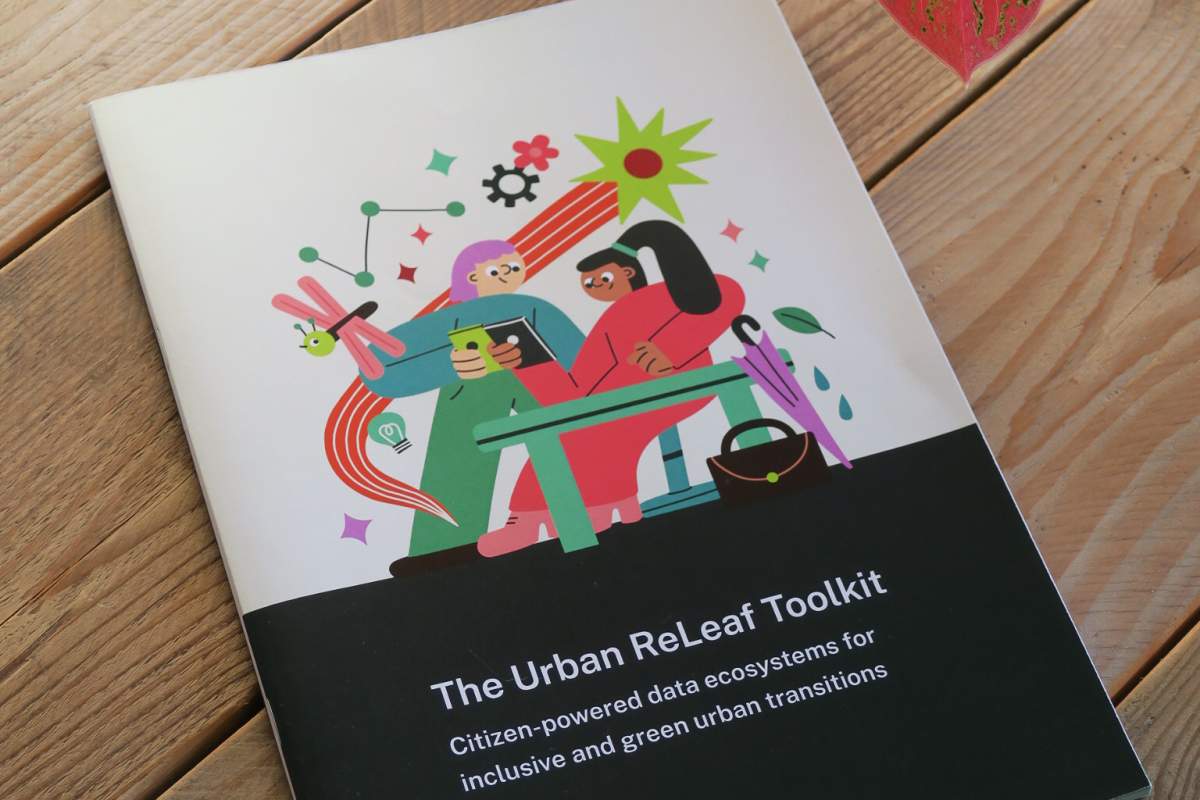
Heat stress, air pollution, and pressure on urban green spaces are increasingly shaping life in European cities. Yet official data does not always capture the full picture. Residents have first-hand knowledge of how environmental conditions affect their everyday lives, from streets that become unbearably hot in summer to green spaces that are difficult to access or feel unsafe.
The Urban ReLeaf Toolkit shows how cities can turn this local knowledge into citizen-generated data to inform urban planning and decision-making. Drawing on practical methods, tools, and lessons from six European pilot cities, it is designed for people working in and with cities, including those new to citizen science and public participation.
More than a collection of tools
The toolkit includes 25 practical tools, such as guides, templates, and resources for campaign planning, community engagement, and environmental monitoring. It also provides guidance on the broader considerations involved in setting up and sustaining citizen science initiatives.
A short quiz helps cities identify their potential role as a regulator or supporter. Guidance on the benefits and barriers of citizen science, alongside an inventory of existing policies, data, and partnerships, helps them assess their starting point. The toolkit also explores how citizen-generated data can complement official datasets, how to select suitable monitoring technologies, and how to integrate citizen science into different stages of the policy cycle.
Six city stories illustrate how citizen science has been put into practice, highlighting the approaches adopted, challenges encountered, and lessons learned. A cross-city overview brings together common experiences and recommendations.
Further, the toolkit offers step-by-step guidance on making inclusion a priority throughout a campaign, particularly when engaging underrepresented communities, through the Inclusive Citizen Science Blueprint. The toolkit also introduces creative approaches such as the Pop-Up Community and Culture Labs, and explores how to translate citizen-generated data into actionable insights and embed participatory data practices in urban governance.
Find your own way through the toolkit
The toolkit does not need to be read from beginning to end. Its structure and cross-references allow readers to focus on what is most relevant to their work, whether governance and policy integration, campaign design, or community engagement and inclusion.
Available online and as a downloadable PDF, it offers practical guidance to help turn citizen science ideas into meaningful initiatives and support more inclusive participation and better-informed urban decisions.
Explore the toolkit: