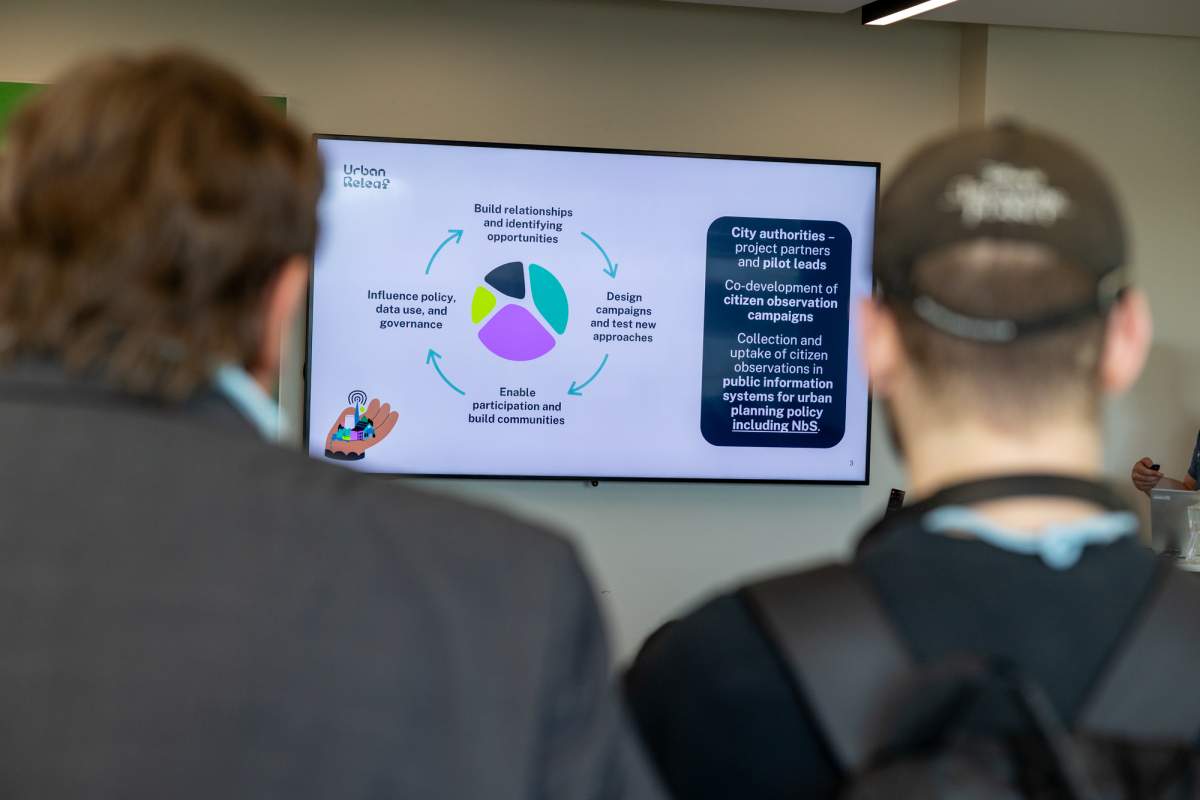
How do we ensure that nature-based solutions in cities genuinely work for everyone and that the people who live there help shape them? These questions were at the heart of Urban ReLeaf’s participation at the 6th Ecosystem Services Partnership (ESP) Europe Conference, held in Prague, Czechia, from 18–22 May 2026.
The conference hosted by the Ecosystem Services Partnership brought together scientists, policymakers, practitioners, and stakeholders to explore how ecosystem services can address biodiversity loss, climate challenges, and social inequalities across Europe. For Urban ReLeaf, it was an opportunity to share project insights, connect with the broader ecosystem services community, and co-facilitate an important conversation about the future of citizen participation in urban planning.

Urban ReLeaf Contributions
Dr Matt Kirby from the University of Dundee presented Urban ReLeaf’s work in a session titled “Co-creating with people and nature: inclusive NBS to promote justice and equity for building sustainable, resilient, and liveable cities”.
The presentation titled “Inclusive citizen-centred nature-based cities: insights from Urban ReLeaf” co-authored with partners from IIASA, Dundee City Council and Empresa Municipal de Ambiente de Cascais, drew on case studies from two of the project’s partner cities, Dundee and Cascais. It illustrated how nature-based solutions can be co-designed with communities to better reflect local needs, priorities, and experiences of green space.

World Café: Whose Scenario?
Urban ReLeaf also co-hosted a World Café session as part of the Community of Practice Working Group 3 (CoP WG3). Titled “Whose scenario? Citizen participation in social-ecological scenario planning,” the session was organised in collaboration with Morten Graversgaard from Aarhus University and Ina Sieber from Universität Kassel.
The World Café format brought participants together in small, rotating discussion groups to explore how best to incorporate citizens into social-ecological scenario planning from inception through to implementation. Conversations ranged across urban, peri-urban, and rural land-use and planning contexts, examining how to collate, advance, and innovate methodological best practice in this space.