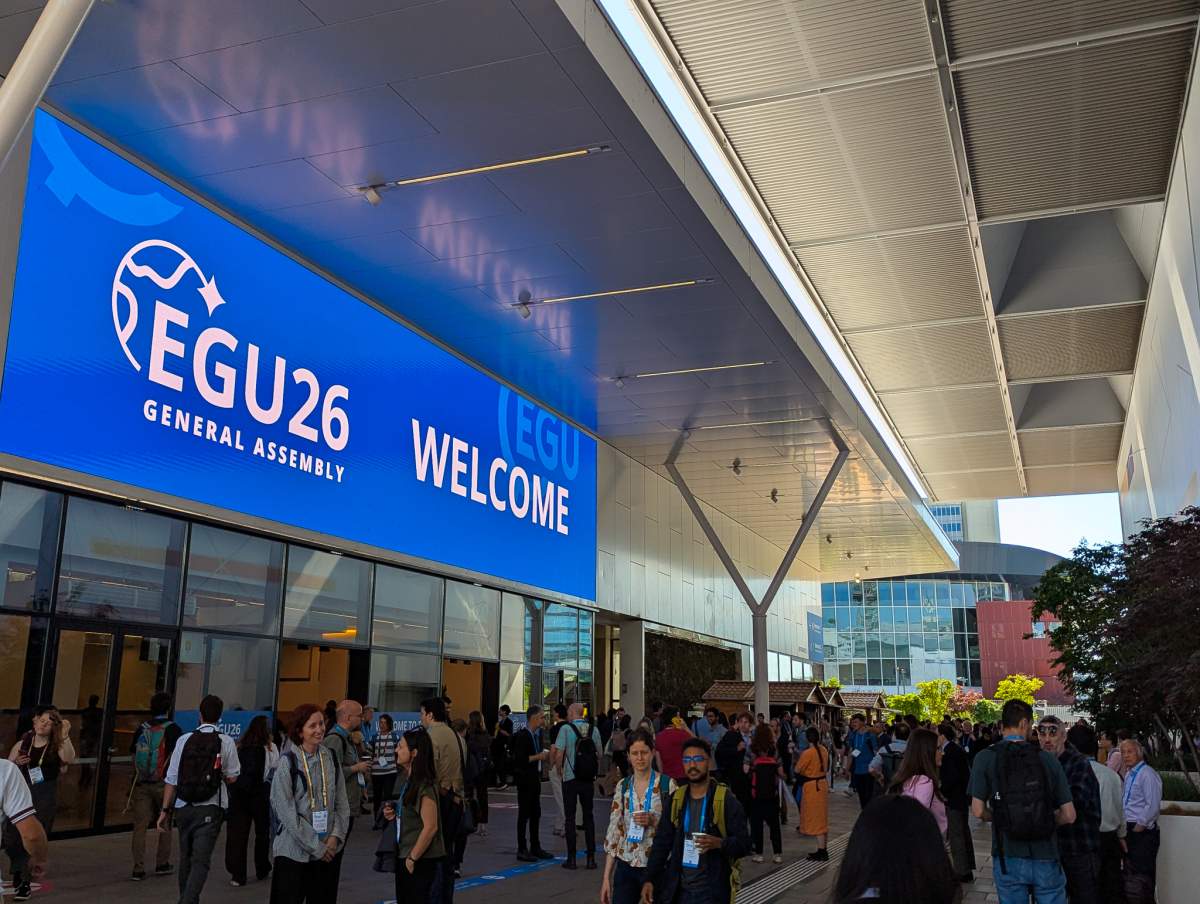
How can cities become more climate-resilient, inclusive, and responsive to the environmental challenges people experience every day? This question was at the centre of the EGU General Assembly 2026 session “Participatory and Integrated Approaches for Climate-Resilient Cities and Regions: Citizen Science and Adaptation–Mitigation Interdependencies.”
The session explored how citizen science, participatory sensing, Earth Observation, and integrated modelling approaches can support climate adaptation and mitigation while addressing wider environmental and social challenges. Bringing together researchers, practitioners, policymakers, technologists, and communities, the session highlighted the importance of moving beyond isolated sectoral approaches toward more connected and inclusive urban climate governance.

Urban ReLeaf Contributions
Urban ReLeaf contributed both a presentation and a poster showcasing how citizen science can generate actionable environmental knowledge while strengthening collaboration between residents, researchers, and municipalities across Europe.
Martin Hofer presented research on citizen-based high-frequency observations of urban microclimates, based on data collected with more than 300 low-cost sensors across Athens, Cascais, Riga, and Utrecht. The work demonstrated how citizen-generated temperature and humidity observations can reveal fine-scale urban heat patterns often missed by official monitoring networks and support heat adaptation, greenspace planning, and public health strategies.

Todd Harwell presented a poster highlighting Urban ReLeaf’s broader cross-city approach to citizen science, including participatory tree registries, air quality monitoring, greenspace assessments, and thermal comfort mapping across six European cities.
Together, the contributions illustrated how locally tailored citizen science activities can complement official environmental data, strengthen collaboration between communities and public authorities, and inform evidence-based urban planning.
More Session Highlights
The session also featured a range of inspiring international case studies demonstrating the diverse potential of citizen science for climate resilience and environmental action.
Caroline Michellier presented the Kivu Citizen Observer network in the eastern Democratic Republic of Congo, where community-based disaster reporting is helping address critical environmental data gaps while supporting local awareness raising and risk reduction.

Camila Tavares shared work on climate risk assessment and women-led resilience building in informal settlements in São Paulo, highlighting participatory approaches that connect climate adaptation, gender, and social justice.
Meanwhile, Domenico Vito presented From Trash2Treasure, a citizen science protocol for mapping and monitoring beach litter in Mediterranean coastal hotspots, demonstrating how participatory environmental monitoring can support both scientific research and public engagement around marine pollution.