How can we better understand how heat is experienced across a city? In Athens, street cleaning staff are helping researchers map urban heat at street level.
A summer of record-breaking heat
Summer 2025 marked another climate milestone. Across Western Europe, summer 2025 was the hottest on record, while Europe as a whole experienced its third hottest summer. In Greece, it was the sixth hottest summer since 1960. According to the National Observatory of Athens, 68 of the 92 summer days were warmer than the 1991–2020 average, while the season’s average temperature was 1°C above the baseline.
As extreme heat becomes more frequent, understanding how conditions vary across cities is increasingly important. Through Urban ReLeaf, the Athens team explored this by putting environmental sensors into the hands of people working outdoors.
Measuring heat on the move
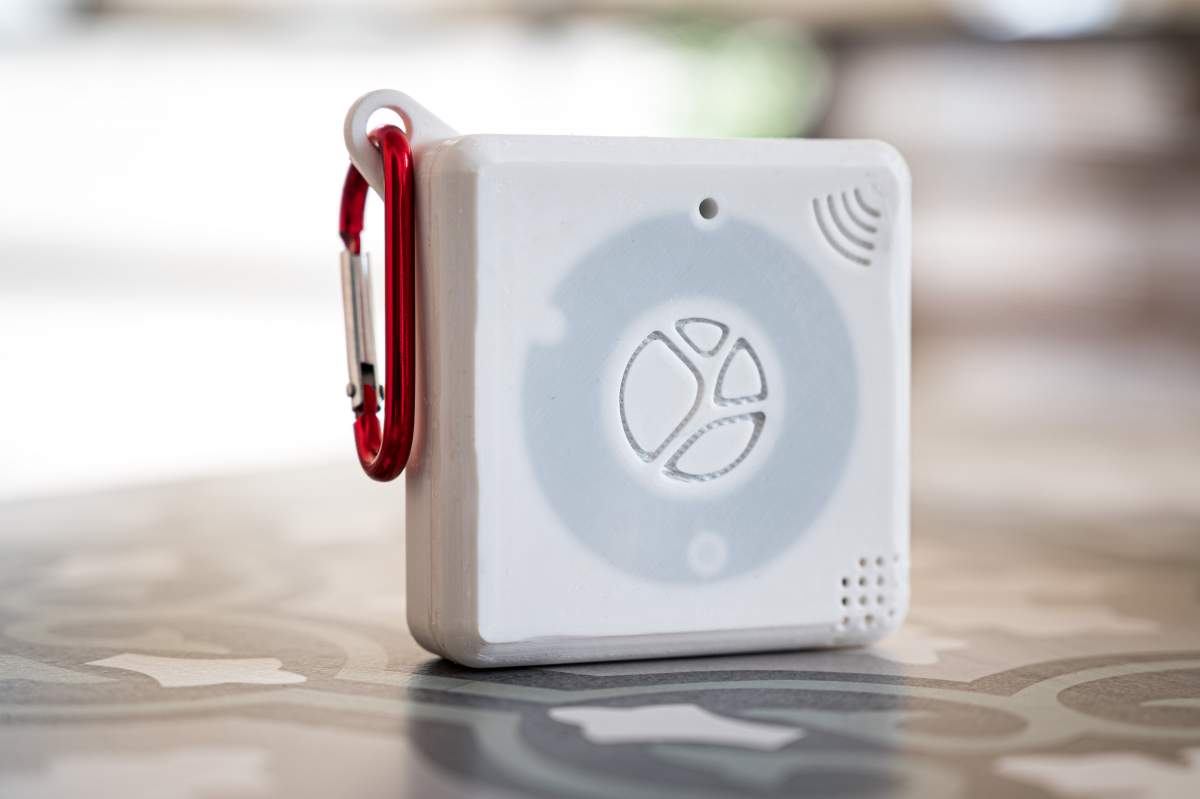
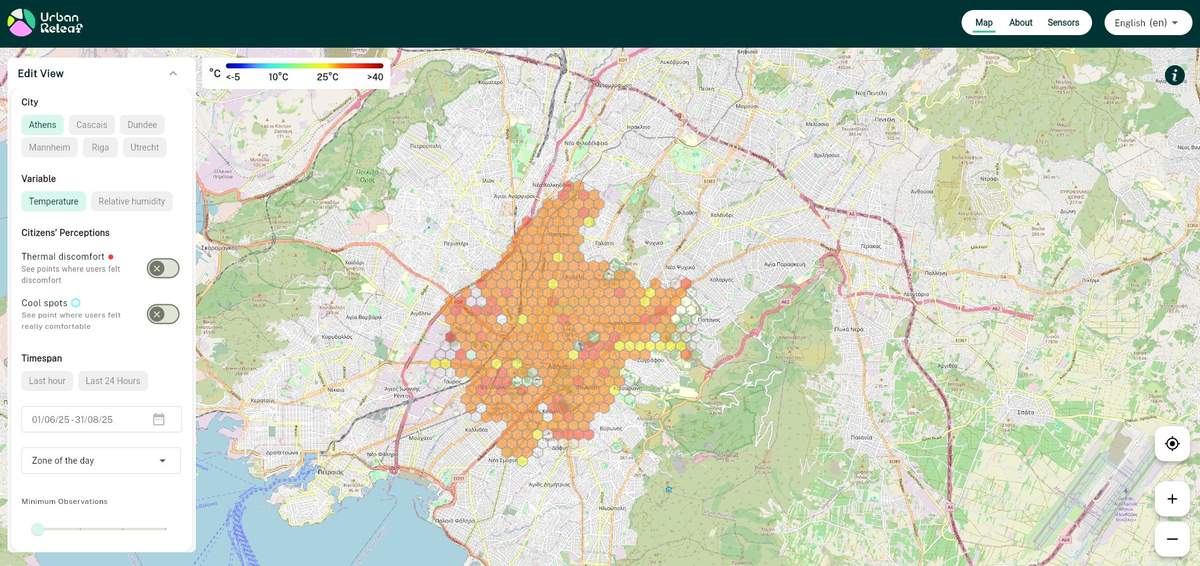
Between June and September 2025, 92 Municipality of Athens street cleaning staff voluntarily carried portable sensors during their everyday shifts. The devices recorded temperature, relative humidity and location across all seven municipal districts, capturing conditions along their real working routes.
The project generated 78,681 temperature readings, alongside 87 reports of thermal discomfort.
A city of many microclimates
The data highlights how heat can vary significantly from one street to the next, influenced by factors including tarmac, shade, buildings, trees and other green infrastructure.
As Dr Georgios Tsimiklis, Smart Integrated Systems Leader at the Institute of Communication and Computer Systems (ICCS), explains:
“The same city can have many very different ‘versions’, depending on where you are, how you move about or what work you do.”
The research also highlighted some of the challenges of collecting data at street level, including the effects of direct sunlight on sensors and the need to refine GPS data.
From data to action
The next stage is to turn these measurements into practical insights for Athens. Urban ReLeaf is analysing the relationship between thermal conditions and tree and green cover, helping identify areas where additional cooling and protection could be most valuable.
This could include opportunities for new shade, vegetation, misting systems and water, as well as identifying cooler routes and potential cooling spots that street cleaners and other outdoor workers can use during hot conditions.
The approach builds on the role of trees and green infrastructure in reducing heat exposure through shading and evapotranspiration, while helping to mitigate the urban heat island effect.
Giorgos Tsilimanis, a senior researcher and scientific project manager at ICCS, highlights the importance of public participation in citizen science:
“Participation requires time, consistency and effort on the part of the public, but also ongoing support and feedback from the researchers. We need to build a relationship of trust and a process in which citizens understand that their own participation can genuinely contribute to a more sustainable city.”
The Athens pilot demonstrates how citizen science can help reveal the different ‘versions’ of a city’s climate, providing insights that can support greener, cooler and more climate-resilient urban spaces.
Read the full article in VIMA Science to discover more about the Athens pilot and its work on urban cooling: