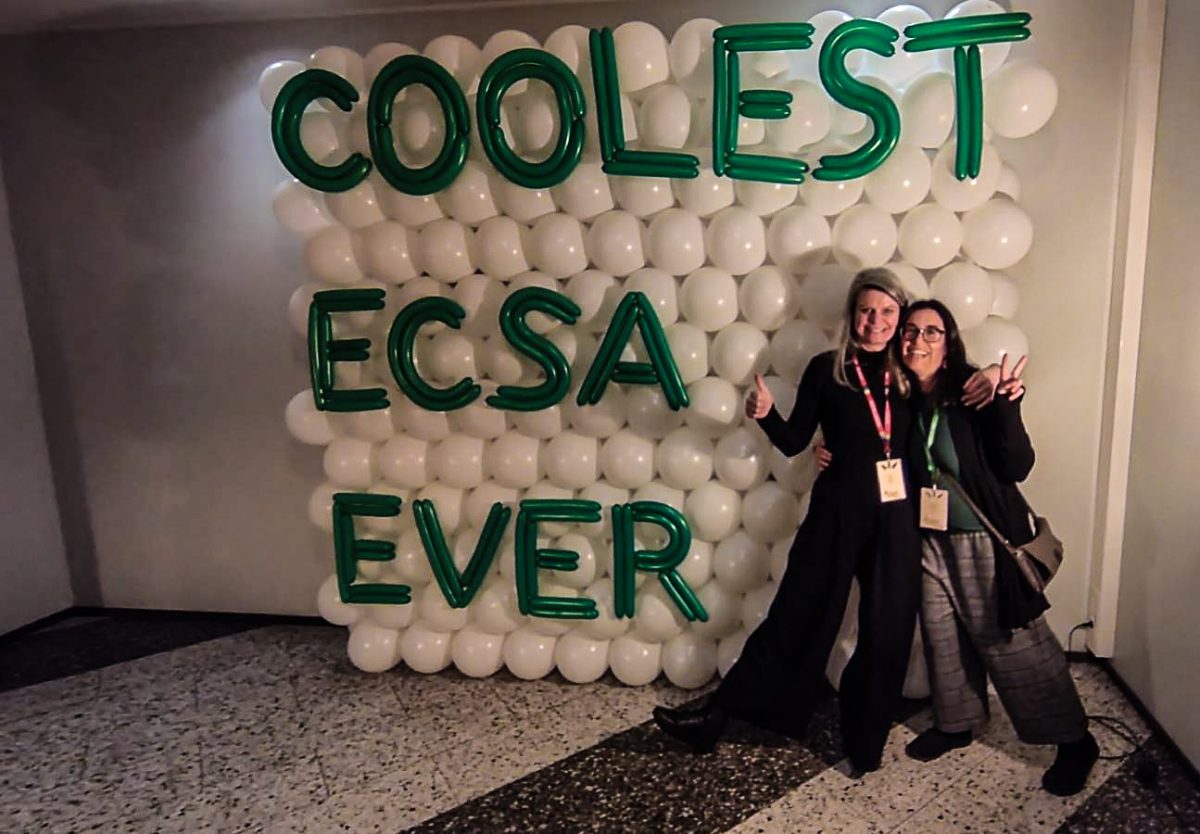
Urban ReLeaf was strongly represented at the European Citizen Science Conference 2026, held in Oulu, Finland from 3–6 March and organised by the European Citizen Science Association (ECSA). The conference brought together the international citizen science community around the theme “Citizen Science: Bridging Centre and Periphery,” exploring how participatory research can connect communities, institutions, and decision-making processes across geographic, social, and institutional divides.
Urban ReLeaf contributions reflected this theme across posters, presentations, workshops, and roundtables. Project partners shared insights on how citizen science data and collaborative monitoring can connect communities with researchers and policymakers to address environmental challenges while supporting more inclusive and evidence-based urban governance.
Bridging communities and decision-making
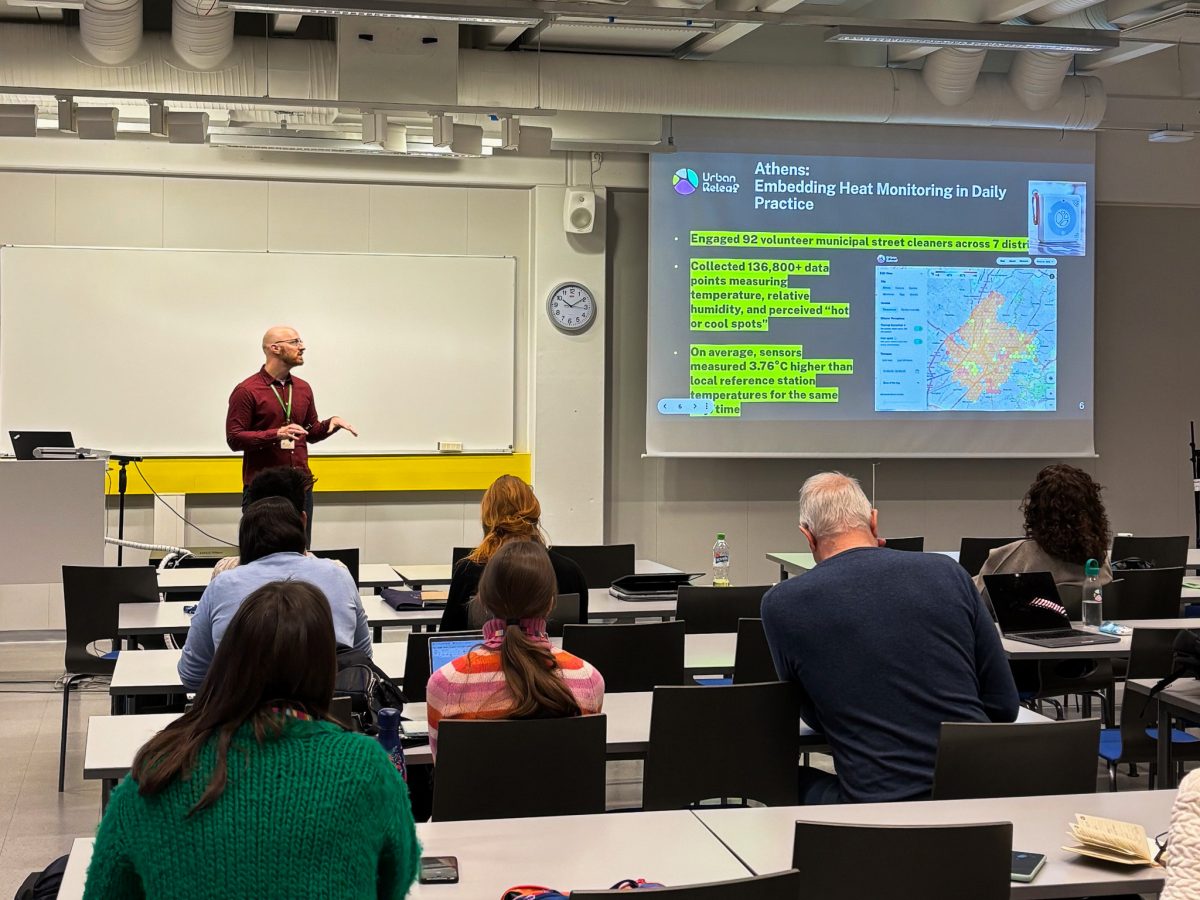
Several Urban ReLeaf contributions explored how citizen science can link local observations with policy processes. In a panel session on citizen observatories, Todd Harwell (IIASA) presented “From Citizens to Policy: Data-Driven Collaboration for Climate Action in Urban ReLeaf Cities.” Drawing on examples from Athens, Cascais, and Utrecht, the presentation showed how residents, researchers, and municipal authorities can work together to monitor heat, air quality, and green spaces, turning community-generated data into actionable knowledge for urban climate adaptation.
In the policy engagement panel, Gerid Hager (IIASA) presented “Urban ReLeaf: Embedding citizen observations in urban policy for greener, healthier and more inclusive cities.” Her presentation examined the institutional conditions needed to integrate citizen science insights into planning and policy decisions. Together, these contributions showed how citizen science can connect citizens’ lived experiences with formal decision-making structures.

Inclusion and participation across diverse communities
The conference’s focus on inclusion and engagement with marginalised communities was also reflected in Urban ReLeaf presentations. A poster by Carina Veeckman (Vrije Universiteit Brussel), “Inclusive Citizen Science Blueprint,” introduced the project’s framework for enabling participation across diverse urban contexts and addressing barriers that may limit engagement by socially vulnerable groups.
Veeckman also presented “An inclusive approach to demographic data collection in the Urban ReLeaf project,” which described the project’s inclusivity monitoring system. By collecting minimal and voluntary demographic data, Urban ReLeaf aims to balance participant safety and privacy with the need to better understand representation and equity in citizen science initiatives. These contributions highlighted the importance of inclusive approaches in reducing inequalities between centres of power and communities often underrepresented in research and decision-making.
Technology, data, and collaboration across borders
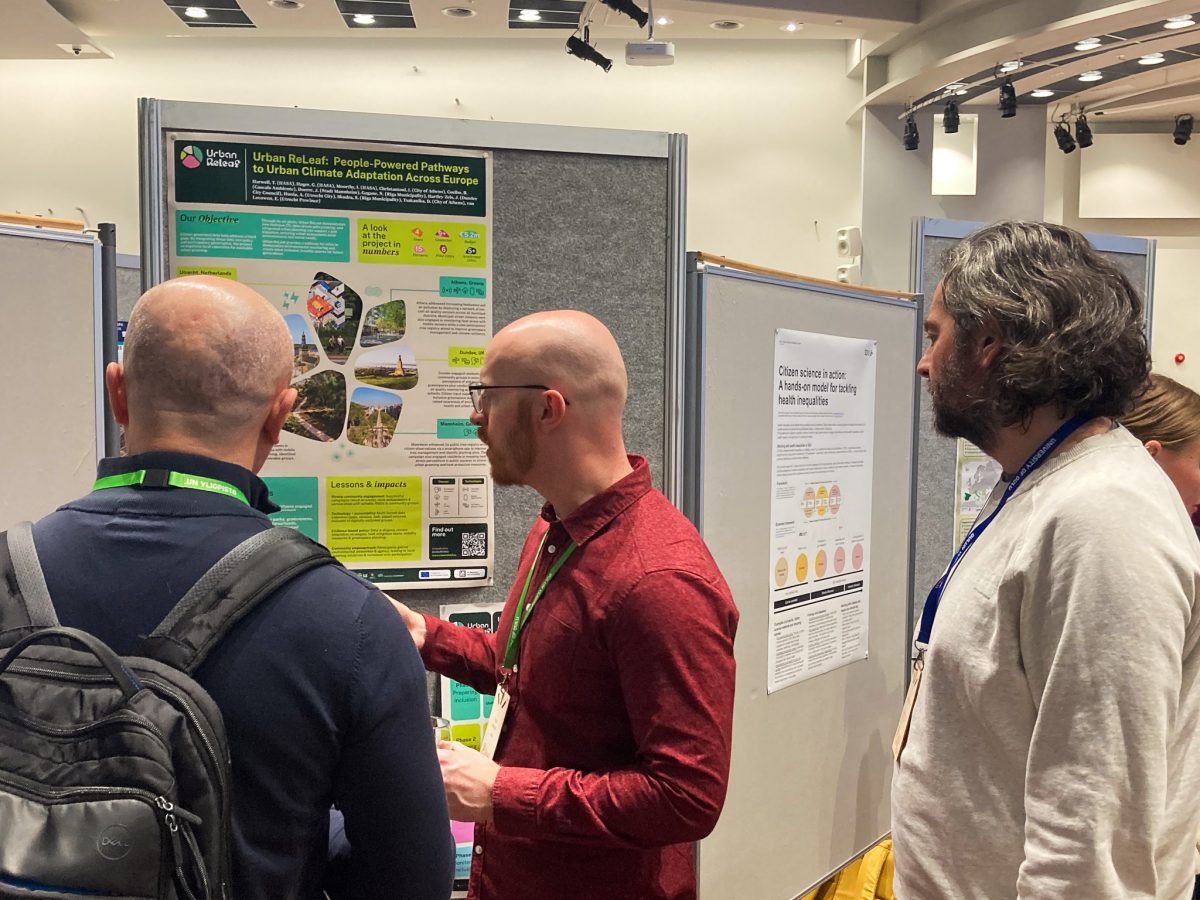
Urban ReLeaf sessions also explored how technologies and data infrastructures can support collaboration across disciplinary, organisational, and geographic boundaries. A poster presentation, “Urban ReLeaf: People-Powered Pathways to Urban Climate Adaptation Across Europe,” introduced the project’s approach to combining sensors, apps, and mapping tools with citizen observations across six European pilot cities.
In a workshop session, Inian Moorthy (IIASA) presented “Tech-enabled citizen science for Urban Futures: Lessons from Urban ReLeaf,” highlighting how sensors, mobile apps, and mapping platforms can support citizens in collecting environmental data and transforming observations into evidence for urban planning and policy.
Additional sessions discussed ethical data integration, cross-sector collaboration, and the role of digital tools in citizen science. Urban ReLeaf partners also contributed to discussions on global monitoring frameworks, including how citizen science could help address urban data gaps in initiatives such as the UN-Habitat Global Urban Monitoring Framework.
Connecting centre and periphery through citizen science
Across the conference programme, Urban ReLeaf contributions demonstrated how citizen science can act as a bridge, linking citizens, researchers, and policymakers; connecting technological tools with lived experience; and fostering collaboration across cities, disciplines, and institutions.
By sharing lessons from its six pilot cities across Europe, the project highlighted how citizen-powered environmental monitoring can support more inclusive knowledge production and contribute to sustainable, climate-resilient urban futures. Participation in the conference also provided an opportunity to exchange experiences with the wider citizen science community and further advance discussions on inclusion, collaboration, and impact in citizen science.